
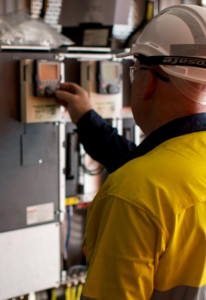
Our electrical expertise covers core power infrastructure and distribution (especially for Hospital & Residential Projects).
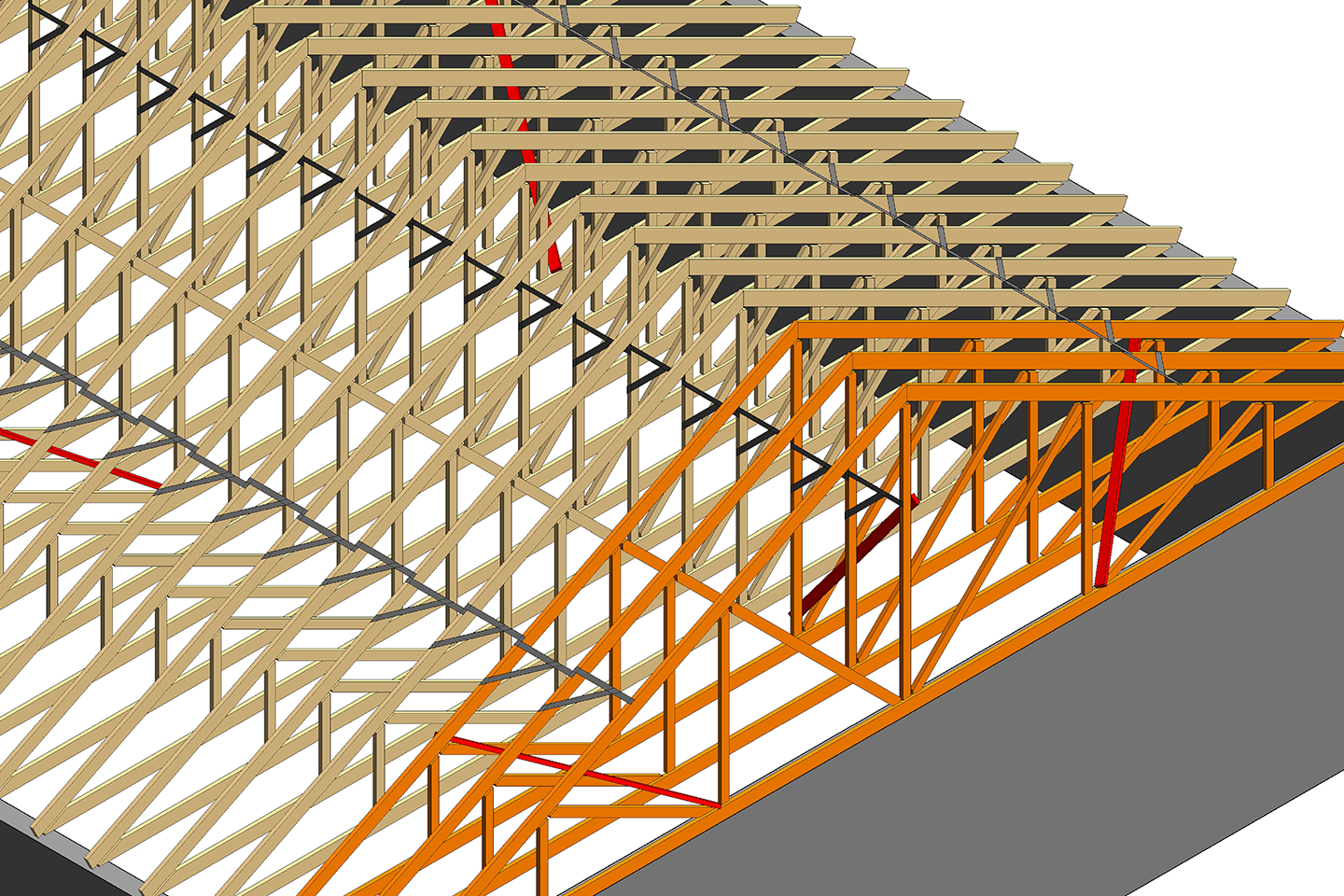
The process generally involves several crucial steps after the foundations are complete:
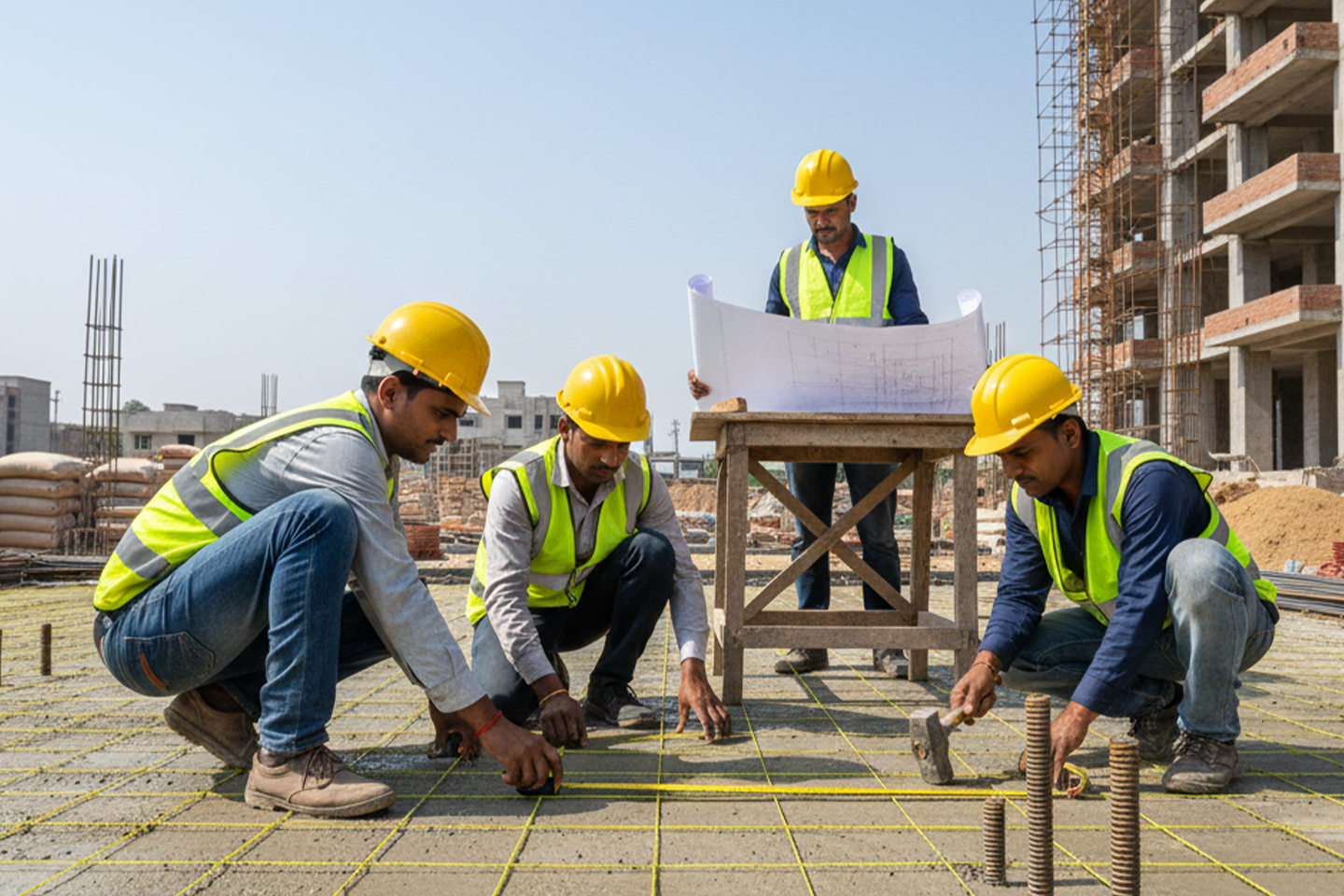
Preparation and Layout: Reviewing plans, establishing gridlines, and preparing the foundation anchor bolts.
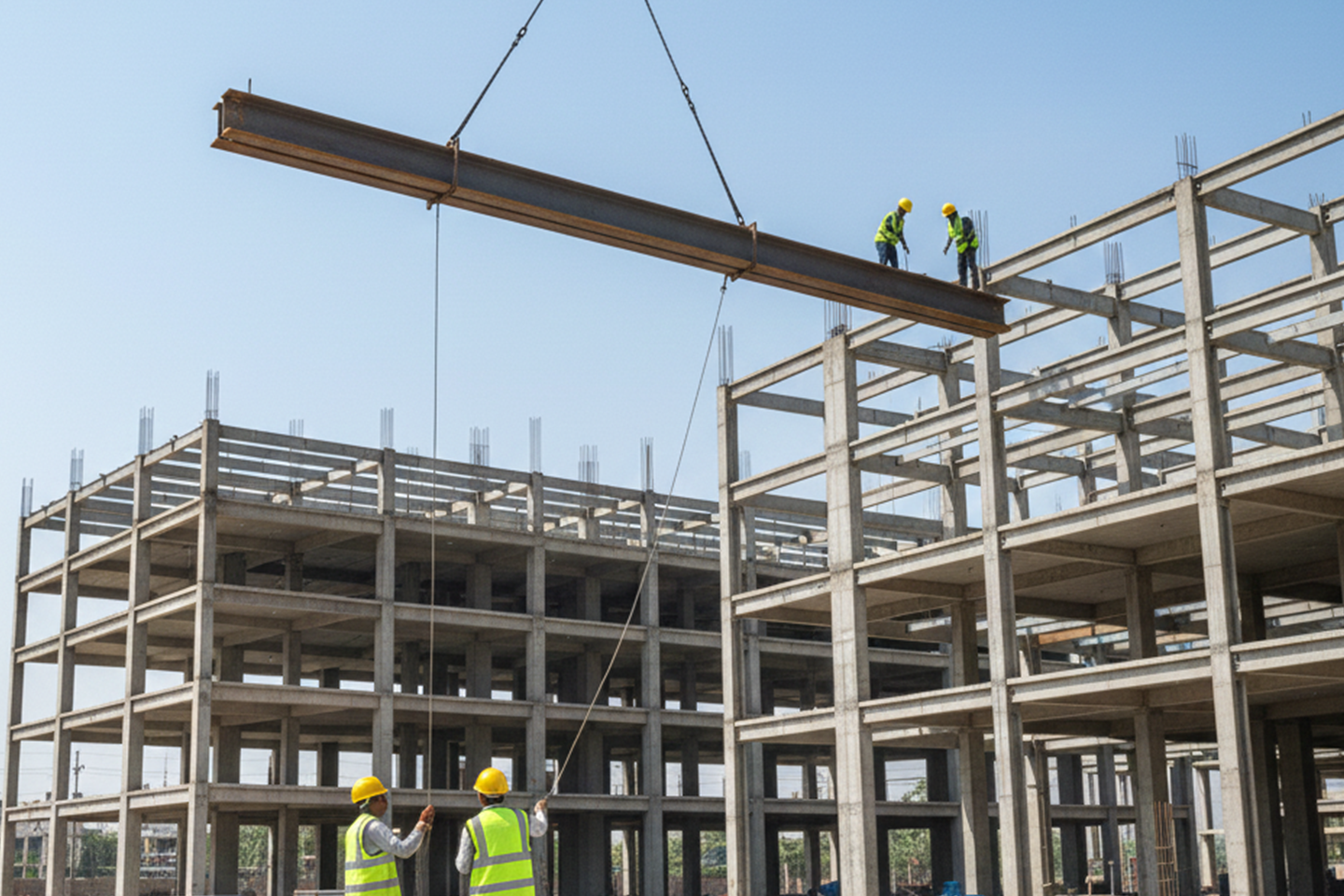
Lifting and Placing: Using cranes to lift individual steel members (beams, columns, trusses) into their correct positions.
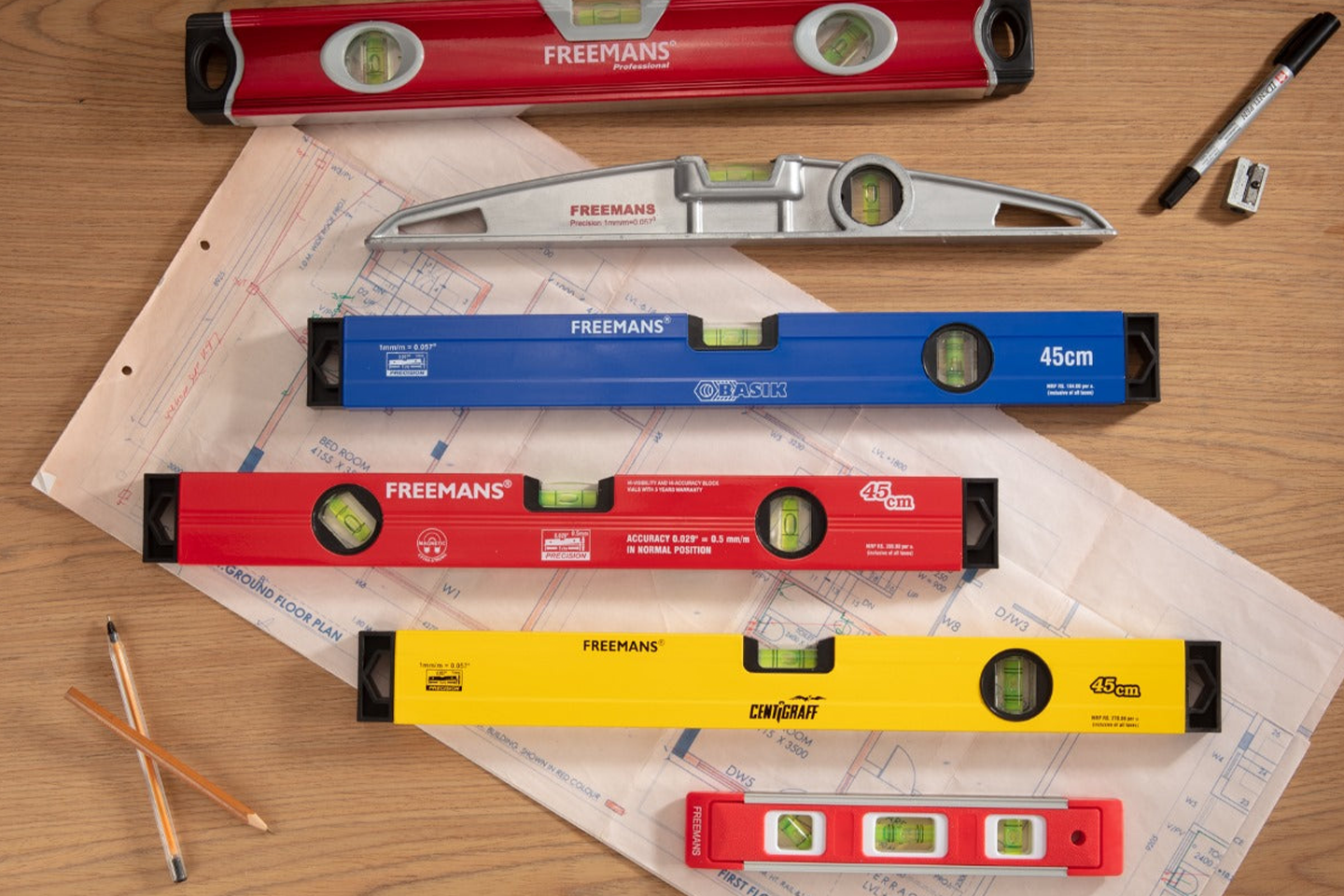
Plumbing and Alignment: Using instruments and tools to ensure the steel is perfectly vertical (plumb) and level.
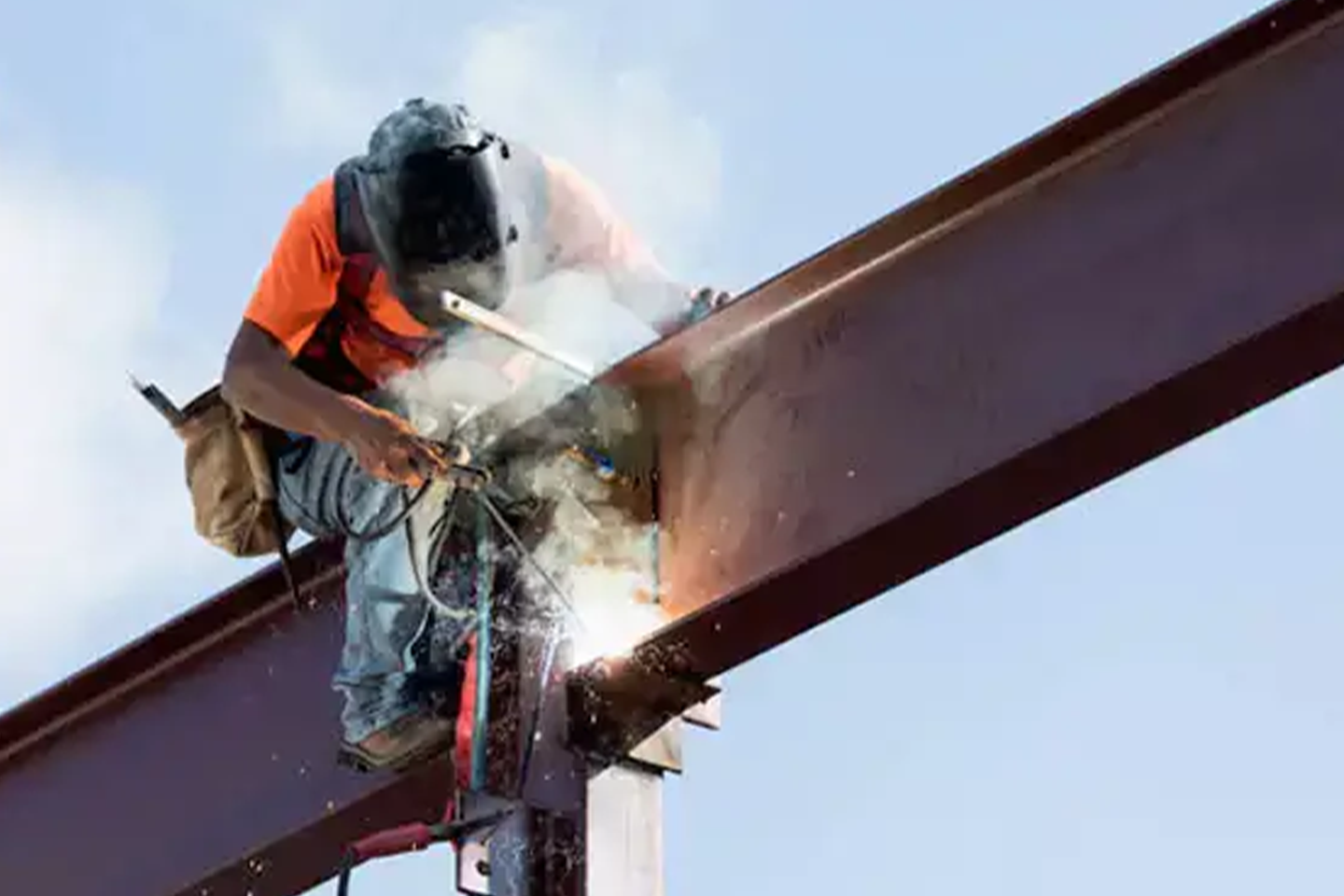
Connecting: Securing the members together using methods like bolting or welding to create a rigid, stable frame.
Bracing: Installing temporary and permanent bracing to provide lateral stability to the structure during and after construction.
The exclusion of civil foundation work means the service starts once the concrete foundations, including the anchor bolts, are ready to accept the steel columns.
Responsible for the precise placement, connection, and commissioning of large, complex mechanical systems and machinery, often in commercial or industrial settings.
This role goes beyond basic assembly; it involves critical steps necessary for a system to become fully functional, efficient, and compliant with safety codes.
The mechanical contractor primarily focuses on equipment that handles fluids, air, or production processes. Their scope of work includes, but is not limited to:
Installation Responsibilities
Installing chillers, boilers, air handling units (AHUs), cooling towers, and major ductwork sections.
Placing, leveling, and aligning heavy machinery (e.g., stamping presses, conveyor systems, production line equipment), often requiring millwright services.
Setting and connecting pumps, compressors, heat exchangers, valves, and pressure vessels used in manufacturing or utility generation.
Plumbing & Utilities Installing water heaters, large tanks, and utility distribution systems to support the mechanical equipment.
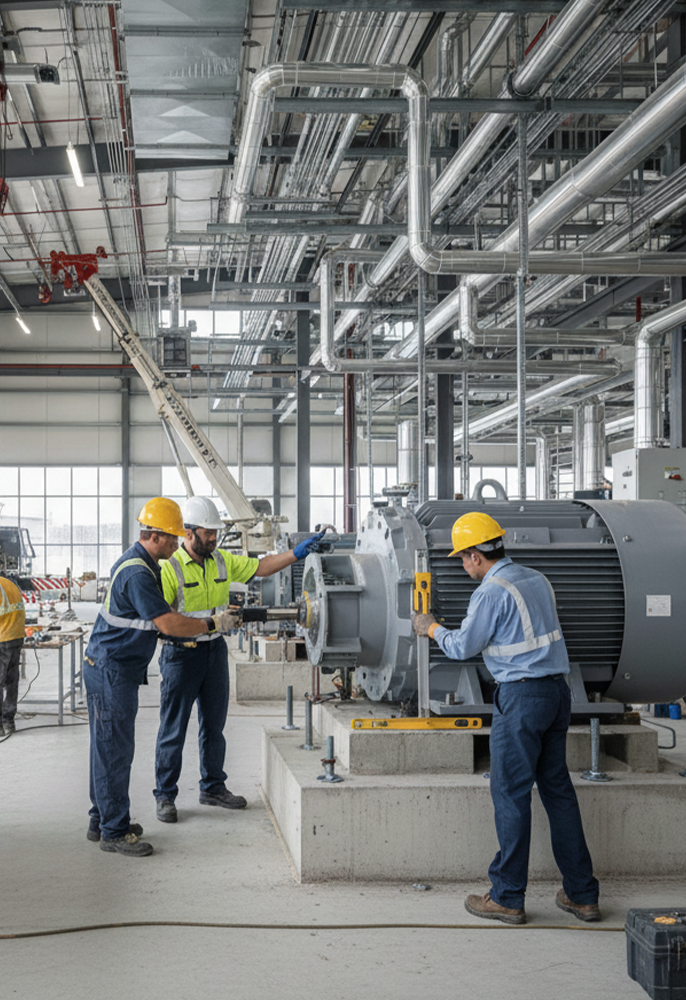
1. Rigging and Setting: Safely unloading, hoisting, and precisely setting the heavy equipment onto its final foundation using cranes and rigging gear.
2. Precision Alignment: Ensuring the equipment is perfectly leveled and aligned (especially crucial for rotating machinery like pumps and motors) to minimize vibration and extend lifespan.
3. Anchoring and Grouting: Securing the machinery to its concrete foundation using anchor bolts and often filling the base plate cavity with grout for uniform load transfer and stability.
4. Utility Hookups: Making all necessary service connections, including:
5. Commissioning: Performing operational tests, calibrations, and system startups to verify that the newly installed equipment functions according to design specifications and safety regulations.
Mechanical, Electrical, and Plumbing (MEP) systems are the essential technical infrastructure of a building that makes it safe, comfortable, and functional for human occupancy. They are often referred to as the “central nervous system” of a structure.
MEP engineering is the science and art of designing, planning, and managing these integrated systems. Their design is crucial for ensuring code compliance, energy efficiency, and operational performance.
The three disciplines are highly interconnected, and efficient building design requires them to be coordinated from the earliest stages of a project.
The mechanical component primarily deals with Heating, Ventilation, and Air Conditioning (HVAC). It is responsible for creating and maintaining a comfortable and healthy indoor environment.
| System | Primary Function | Key Components |
|---|---|---|
|
Heating |
Raises indoor temperature. |
Boilers, furnaces, heat pumps, heating coils. |
|
Cooling |
Cooling Lowers indoor temperature and humidity. Chillers, air conditioning (AC) units, refrigerant lines. |
Chillers, air conditioning (AC) units, refrigerant lines. |
|
Ventilation |
Supplies fresh air, exhausts stale air, and controls air quality. |
Fans, air handling units (AHUs), ductwork, filters. |
The electrical component manages the power distribution and all low-voltage services necessary for the building to operate.
| System | Primary Function | Key Components |
|---|---|---|
|
Power Distribution |
Power Distribution Supplies and distributes electrical power to all equipment. Electrical panels, transformers, circuit breakers, conduits, wiring. |
Electrical panels, transformers, circuit breakers, conduits, wiring. |
|
Lighting |
Provides illumination for safety and aesthetics. |
Light fixtures, switches, occupancy and daylight sensors. |
|
Low-Voltage |
Communication, security, and control networks. |
Data and communication cables, fire alarm systems, security systems, building management systems (BMS). |
The plumbing component is responsible for the movement of fluids within the building and site boundaries.
| System | Primary Function | Key Components |
|---|---|---|
|
Water Supply |
Delivers clean (potable) hot and cold water. |
Water mains, pipes, pumps, water heaters, fixtures (sinks, toilets). |
|
Drainage |
Safely removes wastewater and sewage. |
Drain pipes, traps, vents, cleanouts, sewer lines. |
|
Stormwater |
Manages rainwater runoff. |
Gutters, downspouts, storm drains, detention systems. |
|
Fire Protection |
Provides water for emergency fire suppression. |
Sprinkler systems, fire pumps, standpipes. |
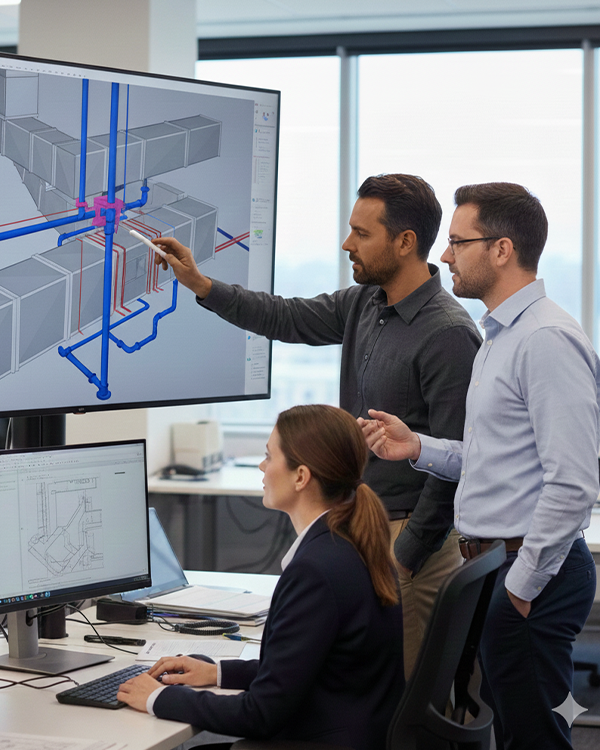
Coordination between the three systems is critical because they all compete for limited physical space within the walls, ceilings, and service shafts of a building.
Comprehensive end-to-end electrical capabilities
Skilled in both conventional and automated systems
On-time, safety-compliant delivery
Trusted by industrial and infrastructure clients across India

Our dedicated team is here to help. Contact us today.